
Why a Basement Dehumidifier Alone Won't Stop Toxic Mold Growth
Written by the Dehumidifier for Basement editorial team and reviewed for source accuracy. — last updated August 2026. Editorial policy
Quick answer
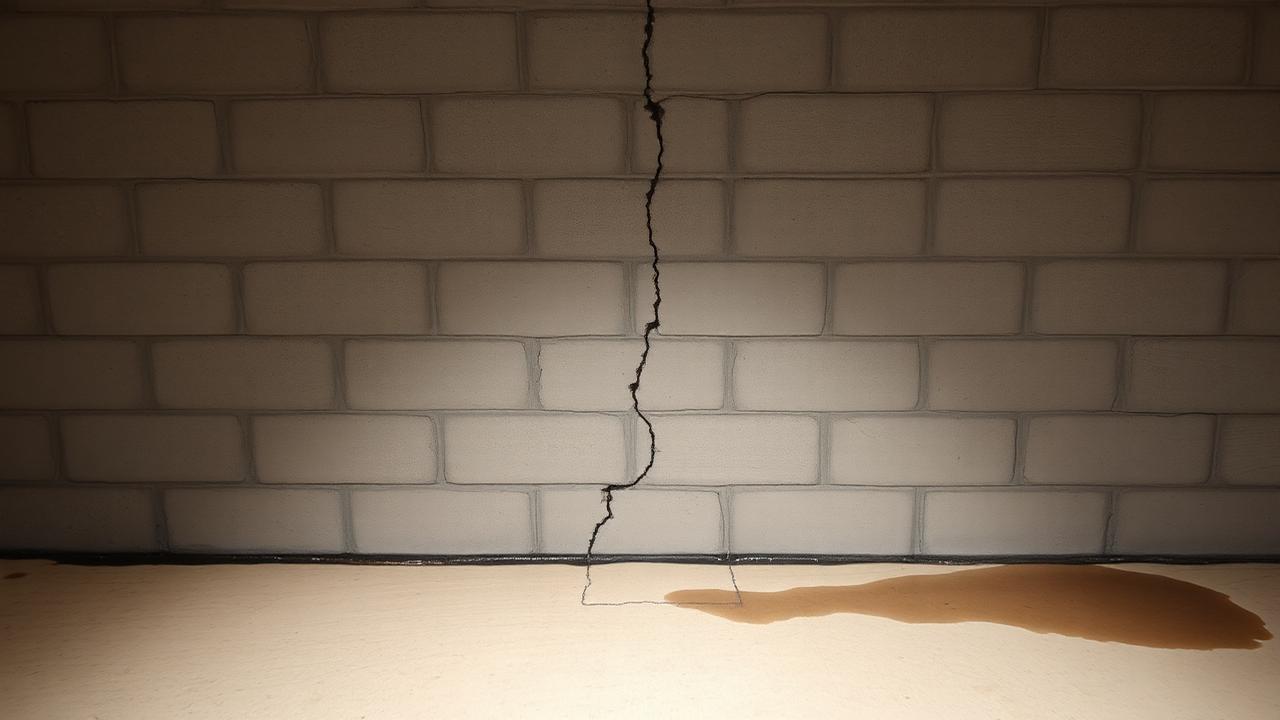
A dehumidifier dries air. Mold on a basement wall is usually fed by liquid water moving through foundation cracks, block cores or the slab joint. Until that path is closed, growth continues behind drywall and under flooring no matter what the humidistat reads.
It is one of the most common and most expensive misunderstandings in basement moisture control: the hygrometer says 48%, the dehumidifier bucket fills every day, and mold keeps coming back on the same wall. Nothing is broken. The appliance is doing exactly what it was designed to do — and that job does not include the problem you have.
What a dehumidifier can and cannot reach
A dehumidifier pulls room air across a cold coil, condenses vapor out of it, and returns drier air. It can only affect moisture that is already airborne and already in the open room. It has no effect on:
- Liquid water wicking through concrete block cores or a cracked footing joint.
- Moisture inside a wall cavity behind drywall, paneling or foam board.
- Moisture under flooring — the underside of a floating floor or the pad beneath carpet.
- Vapor rising through an unsealed slab from saturated soil below.
- Water tracked in by a plumbing leak or condensing on cold supply lines.
Mold needs three things: spores (always present), organic food (paper facing on drywall, wood framing, dust, carpet backing) and moisture. The EPA's guidance on mold is consistent and blunt — control the moisture source and the growth stops; kill it without fixing the water and it returns.
How to tell which kind of moisture you have
| What you see | Most likely cause | Will a dehumidifier fix it? |
|---|---|---|
| Light musty smell, no visible growth, RH 55-65% | Humid air, poor air exchange | Yes — this is the appliance's job |
| Condensation beads on cold walls in summer | Warm humid air on cold masonry | Usually yes, with placement and setpoint work |
| White chalky powder (efflorescence) | Water moving through masonry and evaporating | No — water is passing through the wall |
| Dark staining low on a wall, or a tide line | Liquid intrusion at the wall/floor joint | No — needs drainage or waterproofing |
| Mold returning in the same spot after cleaning | Continuous water supply behind the surface | No — source repair required |
| Soft or bulging drywall, peeling paint | Water inside the cavity | No — open the assembly and dry it |
| Visible crack with damp margins after rain | Foundation crack conduit | No — crack injection or exterior repair |
Why the mold you can see is rarely all of it
Finished basements hide the problem. Drywall sits against furring strips fastened to masonry, and the paper facing on the back of that drywall is ideal food. When water tracks down the block, the visible face may look nearly clean while the cavity side is heavily colonized. The same is true under floating floors, where the underlayment traps a thin film of moisture against the slab.
That is why a musty smell that persists at 45% RH matters so much. A properly working dehumidifier that has not eliminated the odor is telling you the source is somewhere it cannot reach.
Find a licensed local specialist
We can't fix standing water or structural issues with an appliance — but we can connect you with someone who can.
Your ZIP code is stored securely so we can check licensed specialist availability in your area. We never sell your information to unsolicited marketers.
The correct order of operations
- Find and stop the water. Gutters and downspout extensions, grading, window wells, a failed sump pump, a plumbing leak, or a crack that needs injection. This step is non-negotiable and it comes first.
- Open and dry the affected assembly. Wet insulation, drywall and carpet pad do not dry in place behind a finished surface. Materials that stay wet more than 24-48 hours generally need removal.
- Remove the growth properly. Small, hard-surface areas can be cleaned; porous materials and larger areas are remediation work with containment and negative air.
- Rebuild with the right materials. Below grade, that means inorganic or moisture-tolerant assemblies rather than paper-faced drywall against masonry.
- Then run the dehumidifier to hold 30-50% RH and keep the dried assembly stable — which is the role it was always meant to play.
What a professional moisture inspection actually finds
The reason an inspection matters here is that the entry point is almost never where the stain is. Water enters high and appears low; it enters at a window well and shows up eight feet away at the slab joint. A specialist uses tools you do not have on hand:
- Pin and pinless moisture meters to map wet material through a finished surface without demolition.
- Thermal imaging to see cold, wet areas behind drywall.
- Exterior grading and drainage assessment — where the roof water actually lands.
- Sump and drain tile evaluation, including whether an existing system is discharging or recirculating.
- Crack mapping, distinguishing cosmetic shrinkage cracks from active conduits or structural movement.
Getting this diagnosis wrong is what turns a $600 downspout and grading fix into a $9,000 interior drainage retrofit two years later. Getting it right early is the whole argument for having someone look at it before you buy more equipment.
Where the dehumidifier still earns its place
None of this makes the appliance useless. After the source is repaired and the assembly is dry, holding the basement at 45-50% RH is the single most effective ongoing control against regrowth, dust mites and that musty smell. The mistake is asking it to substitute for a repair — not owning one.
Frequently asked questions
Will a dehumidifier kill existing mold?+
No. Lowering humidity can slow or halt further growth on exposed surfaces, but it does not kill or remove existing colonies, and it does nothing for growth inside a wall cavity that is still being fed by liquid water.
Why does mold keep coming back after I clean it?+
Because the moisture source is still active. Recurrence in the same location almost always means water is entering there — through a crack, the wall/floor joint, block cores, or a leak — rather than being deposited from humid air.
What humidity level stops mold growth?+
The EPA recommends keeping indoor relative humidity between 30% and 50%. Sustained readings above 60% support growth on organic materials. But surface moisture from liquid intrusion causes growth even when room RH looks fine.
Can I just seal the wall with waterproof paint?+
Coatings applied to the interior face can hide the symptom while water continues to move through the masonry, and hydrostatic pressure often pushes them off. They are a finish, not a drainage solution.
How urgent is this?+
Active water entry plus visible growth is not a wait-and-see situation. Wet organic materials colonize within 24-48 hours, and structural framing, sill plates and subfloor are all in the path. A local moisture inspection is the fastest way to know whether you are looking at a drainage fix or a remediation project.
Keep reading
Sources and methodology
Guidance on this page is drawn from federal agencies and industry standards bodies rather than our own laboratory testing. We do not test appliances in a laboratory and we do not publish product measurements we did not obtain from the manufacturer or a government listing.
- U.S. Environmental Protection Agency — Mold Course & moisture control guidance (keep indoor relative humidity 30–50%)Used for: Target indoor relative humidity range and mold-growth conditions. Last verified 2026-07-29.
- U.S. Department of Energy — Energy Conservation Standards and Test Procedure for DehumidifiersUsed for: Why capacity ratings changed: the current federal test procedure and its rating conditions. Last verified 2026-07-29.
- ENERGY STAR (EPA) — ENERGY STAR Certified Dehumidifiers product finderUsed for: Certification status, Integrated Energy Factor (IEF) values, and sizing guidance for dehumidifiers. Last verified 2026-07-29.
- Association of Home Appliance Manufacturers (AHAM) — Dehumidifier certification program and sizing guidanceUsed for: Capacity-by-condition sizing ranges and certified capacity verification. Last verified 2026-07-29.
- U.S. Energy Information Administration — Electric Power Monthly — average retail price of electricity, residential sectorUsed for: Default electricity rate used in operating-cost estimates. Last verified 2026-07-29.
Written by the Dehumidifier for Basement editorial team and reviewed for source accuracy. Last updated August 2026. Found an error? Report it through our corrections policy.